Last updated November 23, 2026
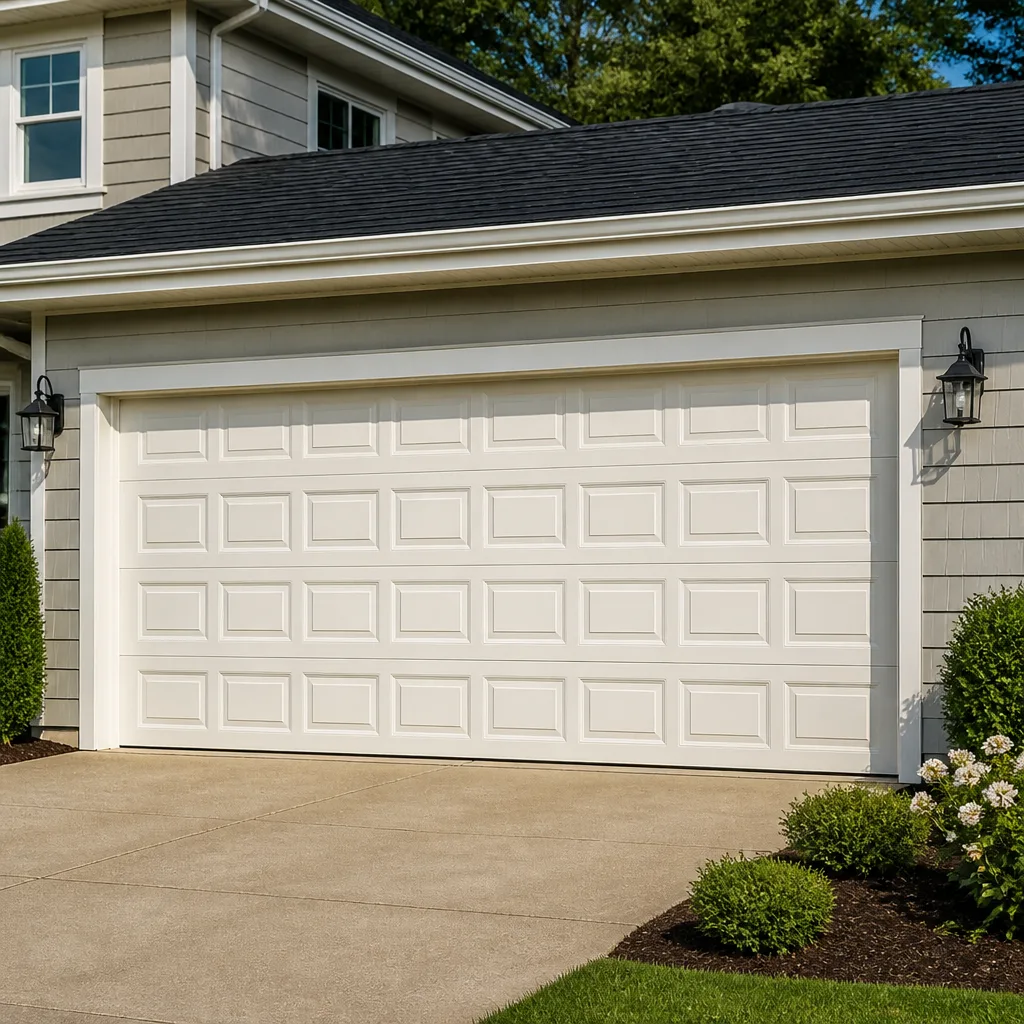 Raised-panel steel
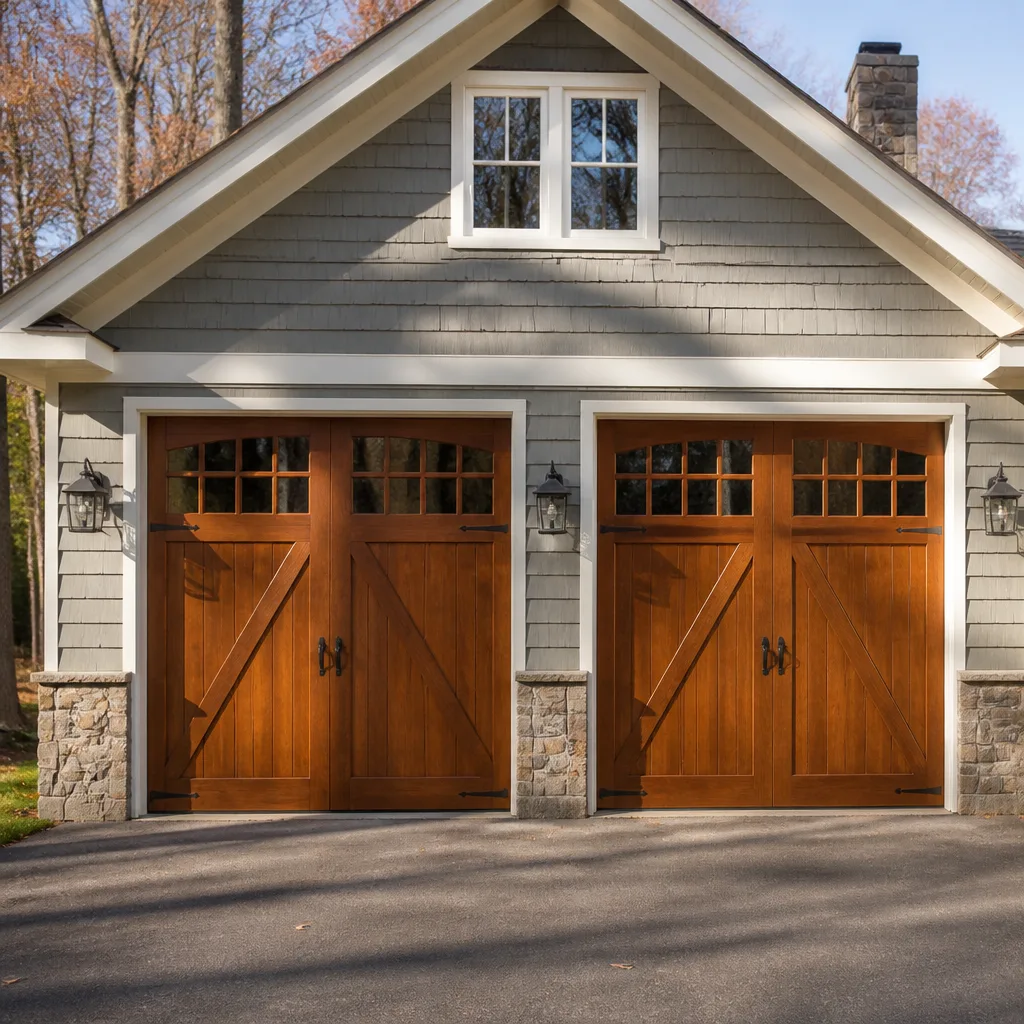 Carriage house
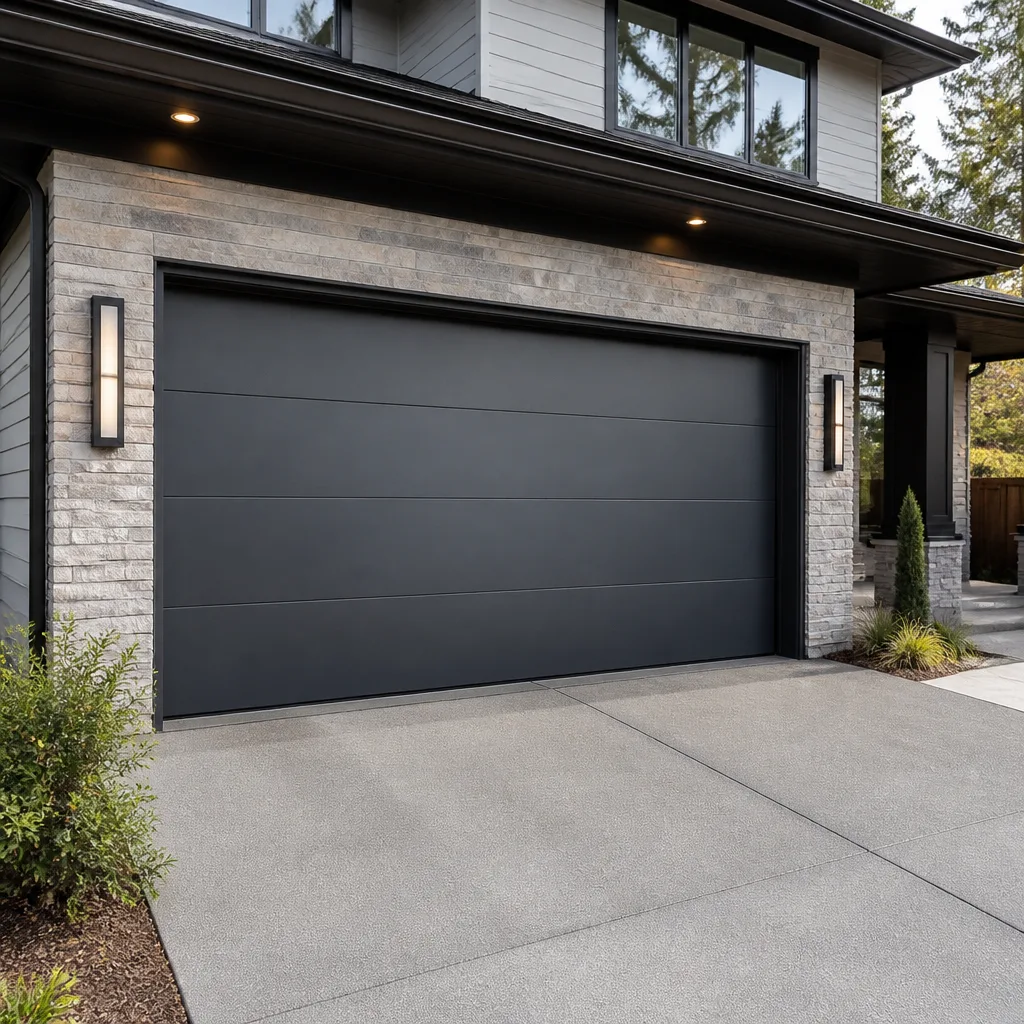 Modern flush
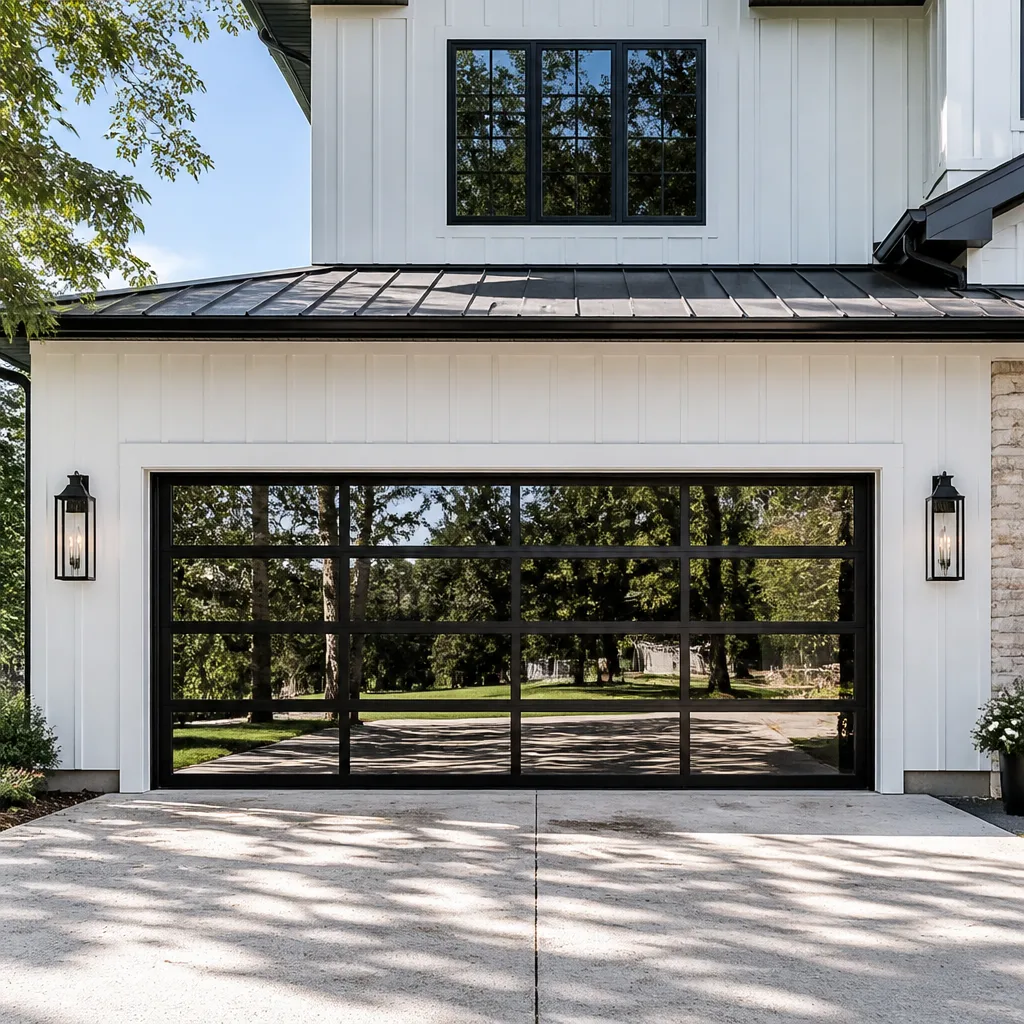 Full-view glass
 LiftMaster openers
 Chamberlain openers
Full 25-point door and opener safety check with every visit - springs, cables, rollers, tracks, and your LiftMaster or Chamberlain opener included
You get a price before we start. It does not change when the pro arrives.
Get your free estimateThe Complete Guide to Garage Doors in Somerville
Most Somerville garages were built before automatic openers existed. That single fact reshapes every decision you’ll make about a garage door here. The standard advice to “just pick a door and an opener” skips the part where your ceiling height, your header clearance, or a shared driveway wall changes what actually fits. A triple-decker off Highland Avenue and a 1950s ranch near Ten Hills have almost nothing in common overhead, and treating them the same is how homeowners end up ordering a door that won’t open.
We’ve written this guide to map every major decision to the housing conditions you actually live with in Somerville. You’ll learn how to read your existing door, sort a cosmetic upgrade from a real repair, and understand the hardware that makes a tight garage work.
Quick Answer
Choosing a garage door in Somerville comes down to measuring your opening and headroom first, then matching door type, insulation, and opener to your housing era. Victorian-era and triple-decker garages usually need low-headroom hardware and compact doors, while newer Somerville condos can take standard-height sectional doors with jackshaft openers. Get the measurements before you shop, and repair-versus-replace becomes a clear decision rather than a guess.
Styles & brands we work with
- Raised-panel steel
- Carriage house
- Modern flush
- Full-view glass
- LiftMaster openers
- Chamberlain openers
Table of Contents
- How Somerville’s Housing Eras Shape Your Garage Door
- Why Headroom Matters More Than Door Style
- How to Read Your Existing Door’s Spec Plate
- Noise in Attached and Semi-Attached Garages
- Insulation and Somerville’s Winters
- Choosing a Garage Door Opener
- Cosmetic Upgrade vs. Functional Repair
- Spring and Opener Safety
How Somerville’s Housing Eras Shape Your Garage Door
Somerville’s garages weren’t designed to a single standard. They were built to whatever the street, lot, and era allowed, and the result is a set of distinct garage types you’ll find across the city. Knowing which one you have tells you most of what you need to know before you ever shop for a door.
- Victorian and early triple-decker blocks (roughly the 1890s onward): These garages were often added later, tucked behind the building or under a rear addition. Openings tend to be narrow, ceilings low, and the structure sometimes uses older framing. Many were built for manual swing-up or one-piece doors, not sectional doors.
- 1900 to 1950 two- and three-family homes: A middle era with a wide mix. Some have proper detached garages with a normal eight-foot opening; others have tight basement-level garages cut into a slope.
- 1950s ranches and mid-century homes: These usually have wider, taller openings and higher ceilings that can take standard sectional doors and belt-drive openers without special hardware.
- Post-2000 condos and infill construction: Newer buildings often include a garage bay with a clean, standard opening, but shared walls and occupied units above mean noise and vibration matter more than raw clearance.
In dense Somerville neighborhoods, the garage is frequently at the property line, sharing a wall with a neighbor or sitting directly under living space. That affects both the door you choose and the opener you put on it. On a packed block between Union Square and Inman, a mismatched door isn’t just a cosmetic problem; it can foul a shared wall or a tight ceiling.
The practical takeaway: before you compare door styles, identify your era. It narrows your options fast and saves you from buying hardware you can’t install. Our Somerville Garage Door Repair Co team can confirm your garage type and what fits.
Why Headroom Matters More Than Door Style
Headroom is the space between the top of your door opening and the ceiling above it. It determines which opener and track configuration you can use, and in Somerville it’s the single most overlooked constraint. A homeowner picks the door they love, then discovers the opener won’t fit above it. Low-headroom hardware kits exist for exactly this reason.
Here’s how headroom breaks down in practical terms. Standard sectional doors need a certain amount of clearance behind the door for the track to curve up and back. When the ceiling is unusually low or the space behind the door is shallow, the door must be installed with a low-headroom kit that lets the track hug the ceiling tightly. On the flip side, high-lift or high-headroom kits raise the track so the door opens higher, which matters when a hanging opener or stored items sit above the door.
Somerville garages fall into these patterns:
- Low-headroom garages: Older rear and basement garages where the ceiling sits close to the opening. Low-headroom kits and certain side-mount or low-profile openers fit; a full-size trolley opener does not.
- Standard-headroom garages: The most common in mid-century and newer Somerville builds. Standard track and belt-drive trolley openers work fine.
- High-lift situations: Garages with extra vertical space where you want the door to open higher, sometimes to clear a taller vehicle or a storage area above.
The right move is to measure the headroom before door shopping, not after. If you’re already dealing with a door that binds or an opener that strained, this is where dedicated garage door repair skills matter. The wrong kit on a low ceiling causes the door to jam and stresses the opener repeatedly.
How to Read Your Existing Door’s Spec Plate
Most garage doors carry a small specification plate or label on the door panels or the frame. It’s your shortcut to identifying what replacement options fit without guesswork. Reading it correctly is the difference between a smooth replacement and a return shipment.
Look for these items on the plate:
- Width and height: The nominal door size. Compare it to your actual opening measurement, because true sizes vary by maker.
- Manufacturer and model: Tells you the door’s construction and which maker’s hardware it uses. This is where brand fluency pays off, since Clopay, Amarr, and Wayne Dalton doors all use different panel and track systems.
- Wind-load or panel rating: Relevant to how the door is built and what it was rated for.
- Serial or part number: Useful for matching hardware and panels exactly if you only need a repair rather than a whole door.
How to use it:
- Photograph the plate and the door from a few angles.
- Measure the opening width and height, the headroom above the opening, and the depth behind the door.
- Note the door type: sectional, one-piece tilt, or swing-up.
- Share those numbers when you request a quote, and the range of fitting doors narrows immediately.
Reading the plate won’t always replace a measurement, but it gets you 90 percent there. A modern garage door installation quote built on accurate plate and opening data is far more precise than one made from a photo alone. For older Somerville doors with no readable plate, measuring the opening is the fallback.
Noise in Attached and Semi-Attached Garages
In dense Somerville blocks, garages are often attached to living space or share a wall with a neighbor. That makes noise a real design factor, not an afterthought. A door that’s fine on a detached ranch can rattle through a bedroom wall on a tightly built three-decker street.
Where the noise comes from:
- The opener: Chain-drive openers are the loudest; belt-drive is quieter; screw-drive sits between them depending on the mount. For an attached garage under living space, a belt-drive opener is usually the better fit.
- The tracks and rollers: Worn nylon rollers clatter; cheap metal rollers transmit sound. The mount above the door also matters; a loose bracket vibrates the whole ceiling.
- The door itself: Sectional doors with a steel skin can drum when they move; insulated doors with a steel back skin tend to be quieter and stiffer.
- Vibration into the building: In a shared-wall garage, an opener mounted rigidly to the joists above transmits noise straight into rooms. Isolation and proper bracket mounting help.
If you live in a semi-attached townhouse or a Somerville condo with units above the garage, choose the opener and door for quiet operation from the start. Retrofitting quiet hardware later costs more. A dedicated garage door opener repair visit can also address a noisy opener by checking mounts, rollers, and drive type rather than just replacing the motor.
Insulation and Somerville’s Winters
An insulated garage door isn’t a luxury in Somerville; it’s a sensible choice for any garage that shares a wall or floor with living space. Insulation reduces heat loss and, just as importantly, cuts noise and stiffens the door on cold mornings.
How to think about it:
- If your garage is attached or under living space: An insulated, steel-backed sectional door is worth the difference. The garage becomes a buffer instead of a cold sink against the house.
- If the garage is detached and unheated: Insulation still helps with noise and door stiffness but matters less to home comfort.
- If you park a car there in winter: A stiffer, better-sealed door moves more reliably when temperatures drop, reducing strain on the opener.
Insulation is one of the few upgrades you can justify on comfort grounds alone, separate from resale. Newer doors from Clopay and similar makers offer insulation in steps, and the right level depends on how your garage connects to the rest of the building.
Choosing a Garage Door Opener
Opener choice follows from your headroom, noise needs, and door weight, not the other way around. The most common mistake is choosing an opener by brand name before checking whether it fits the garage.
A practical decision path:
- Measure headroom and door weight. Low headroom points toward low-profile or side-mount openers. Heavy doors need an opener rated for the load.
- Match opener type to noise sensitivity. Belt-drive for attached garages under living space; chain-drive is durable and fine in a detached garage.
- Check connectivity and safety features. Modern openers from LiftMaster, Chamberlain, and Genie offer remote and app control, plus the safety-reversing system that stops the door if it meets an obstruction.
- Confirm the brand’s parts and service support. A brand with broad serviceability matters more than a cutting-edge feature you’ll rarely use.
- Get it installed and tuned together with the door. An opener set up for the wrong door spring tension behaves unpredictably.
Because you’ll want an opener that matches the door and the ceiling, it’s worth deciding both at once. Our team works across the major opener brands rather than pushing one product line. If you’re not sure what you have, we can identify it and recommend what fits.
Cosmetic Upgrade vs. Functional Repair
Homeowners in Somerville often spend on a cosmetic upgrade when the real issue is functional, or the reverse. Sorting the two apart prevents both overspend and unsafe shortcuts.
Treat it as a functional repair when:
- The door binds, jerks, or won’t stay level.
- You hear a loud snap and the door won’t lift (a sign of a broken spring).
- The opener strains, reverses without reason, or runs but doesn’t move the door.
- The door is off its track, or a panel is bent from impact.
- The safety-reversing feature fails when tested.
Treat it as cosmetic when:
- The door works reliably but looks dated, dented, or faded.
- You want better insulation, windows, or a different color for curb appeal.
- The panels are intact and the hardware is sound.
Functional problems come first. A beautiful new door on a failing spring or a misadjusted opener is money wasted and, in the spring case, genuinely hazardous. Our garage door spring repair work is a good example of where function outranks cosmetics; a spring fault must be fixed before any other spending makes sense.
Spring and Opener Safety
Garage door springs and their cables are under heavy tension and are the most dangerous part of the whole system. A spring can release stored energy suddenly, and the tension is far higher than most people expect. Never attempt to adjust, remove, or replace a spring or the cables attached to it yourself. This is work for a trained technician using proper tools and restraint equipment.
What’s safe for a homeowner to check: the door’s balance (with the opener disconnected, a balanced door stays roughly in place when lifted partway), the safety-reversing feature (place a small object in the door’s path and confirm it reverses), and visible wear on rollers and weather seals. What’s not safe: springs, cables, and anything under tension. If the door drops suddenly, makes a sharp crack, or the opener strains, stop using it and call for help.
Common Mistakes to Avoid
- Ordering a door before measuring headroom. In Somerville’s low-ceiling garages, a standard track and full-size opener won’t fit. Measure first, then shop.
- Buying one spring instead of a matched pair. When one spring fails on a two-spring door, the other is at the same age and usually replaced with it. Replacing one leaves you back here soon.
- Choosing an opener by brand before checking the door. The opener must match the door’s weight and motion. The garage decides.
- Installing a loud chain-drive opener under living space. In an attached Somerville garage beneath a bedroom, a belt-drive opener avoids rattling the whole ceiling.
- Treating a broken spring as “just needs a lube.” A door that won’t lift is a functional repair, not cosmetic. Stop using the door and get it looked at.
- Ignoring shared-wall and property-line realities. In dense neighborhoods, an oversized or mismounted door can foul a neighbor’s wall or a tight ceiling line.
- Assuming a new door fixes an opener problem. A misadjusted or failing opener will still misbehave with a brand-new door; diagnose the actual fault first.
See the difference
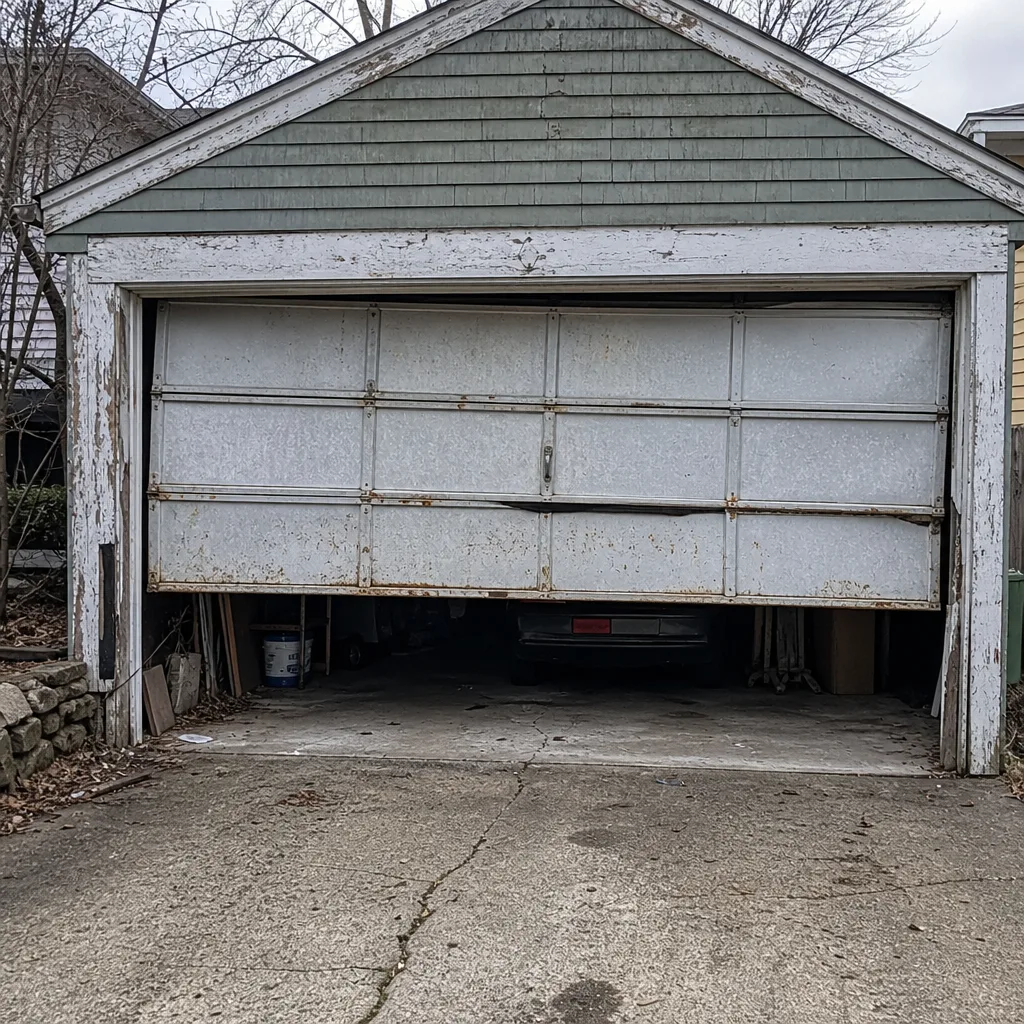 Before
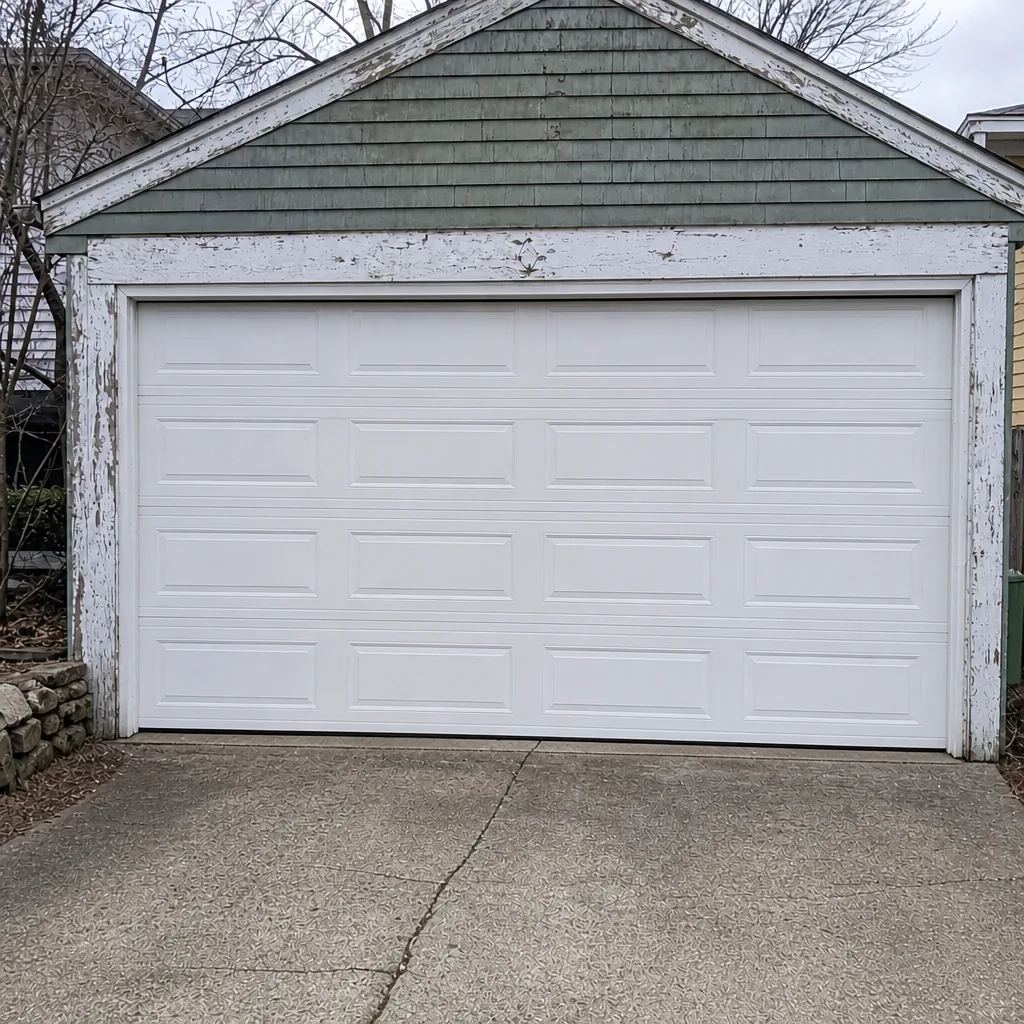 After
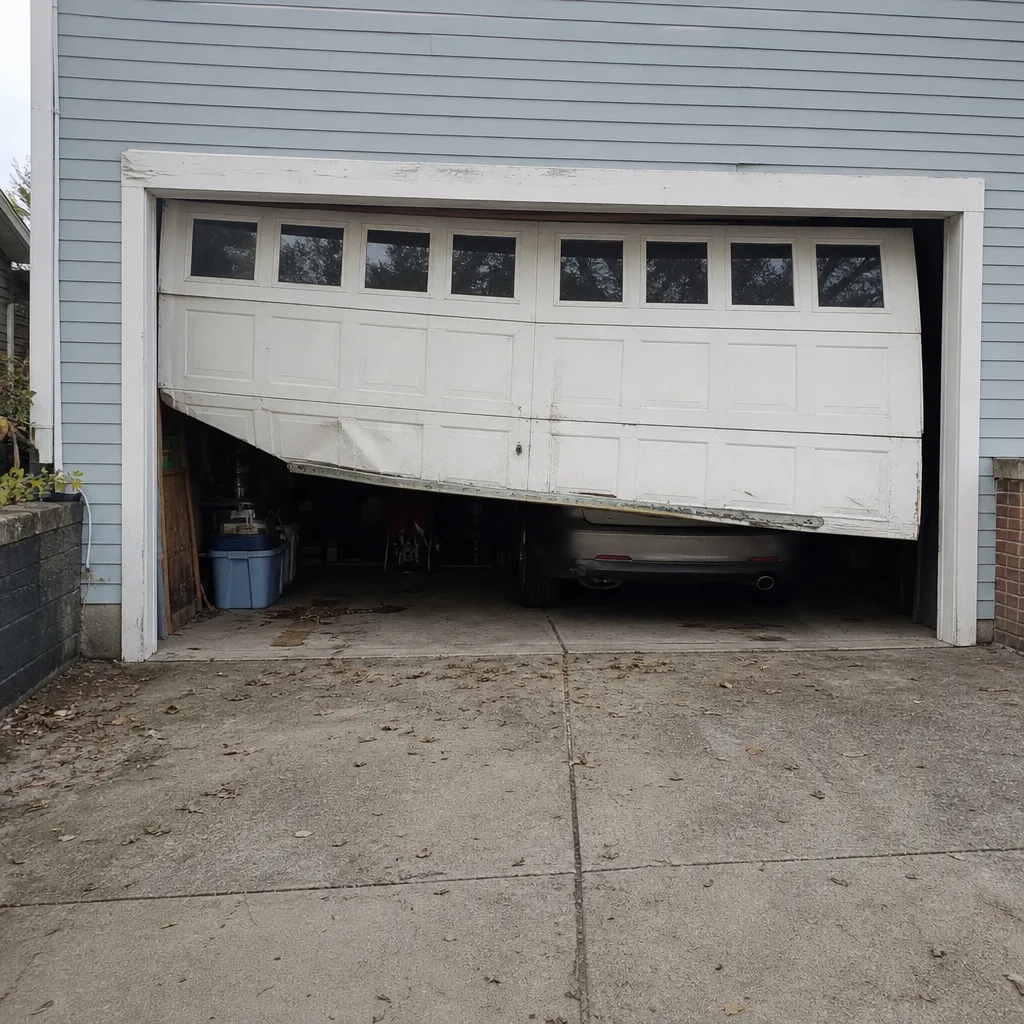 Before
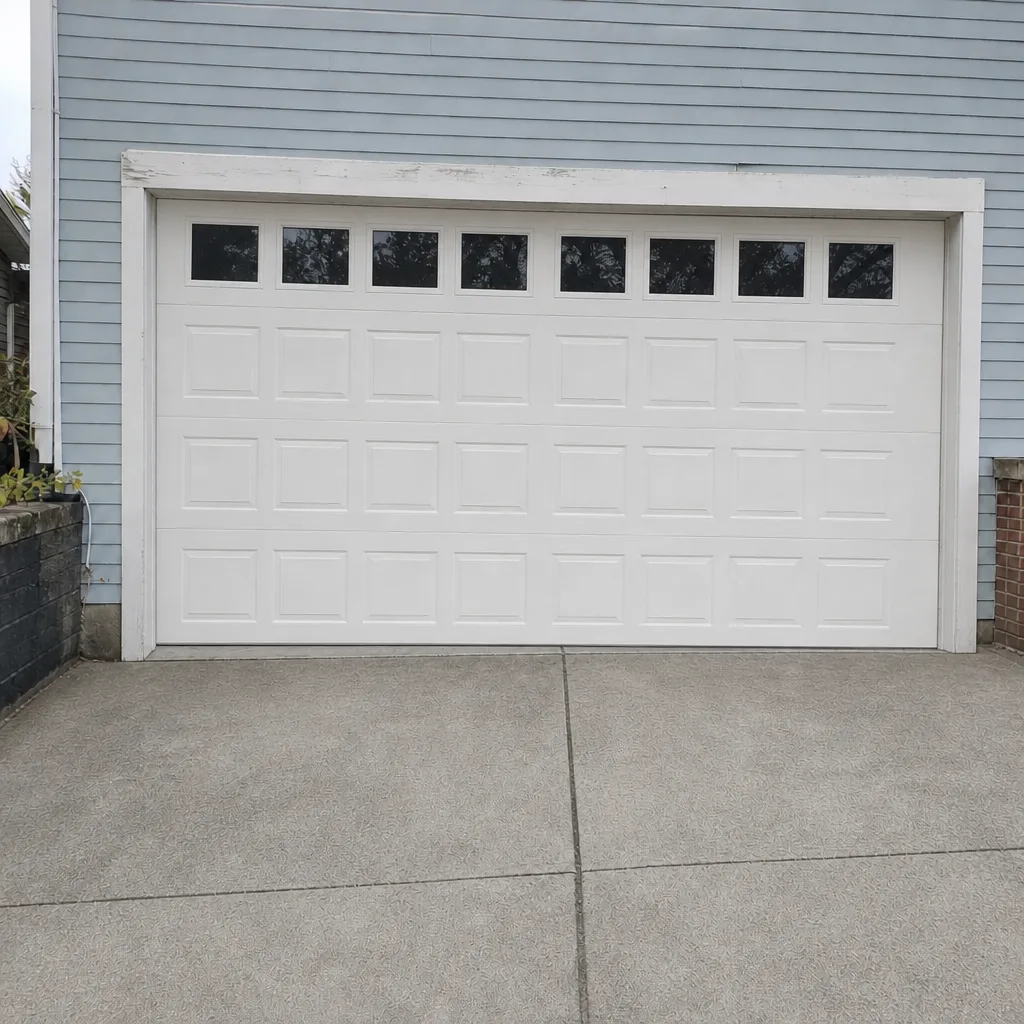 After
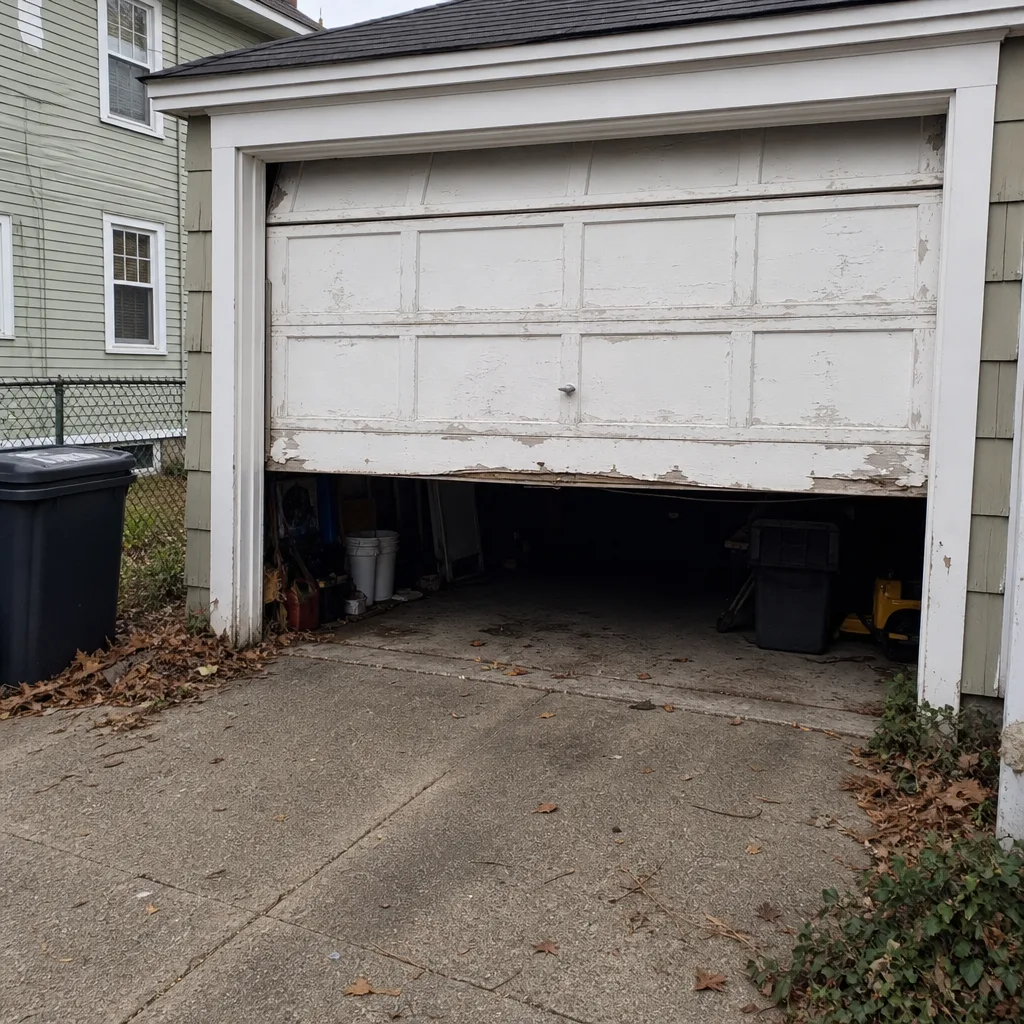 Before
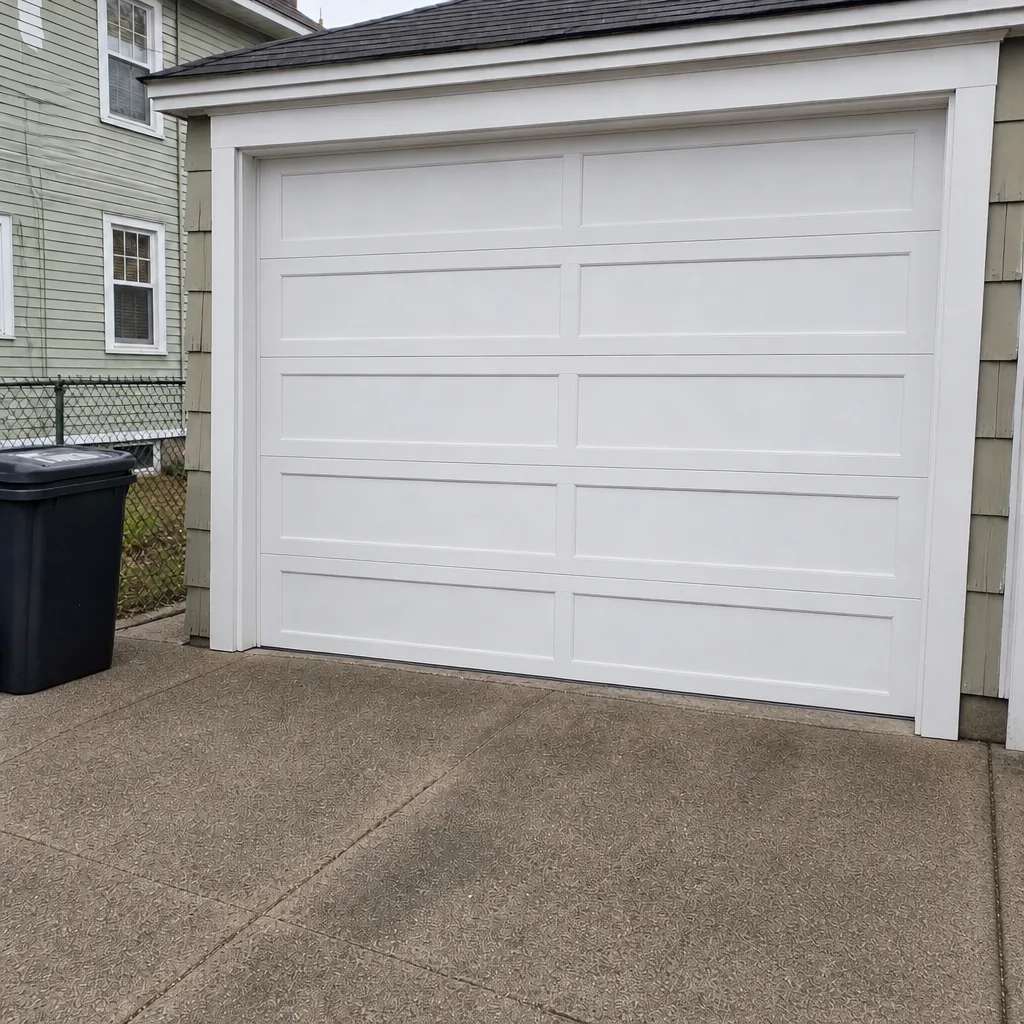 After
When to Call a Professional
Call a professional when the door won’t move, when the opener strains or reverses for no clear reason, or when you suspect a spring or cable problem. Those are safety situations, not weekend projects. Call also if the door has come off its track, if a panel is bent from impact, or if your existing garage is an unusual shape and you’re unsure what fits. A technician who works only on garage doors can read your spec plate, measure headroom, and tell you whether repair or replacement is the sensible path. Somerville Garage Door Repair Co offers free estimates in Somerville – call (877) 330-6542. Estimates are free, and the written estimate sets the final price before any work starts.
Frequently Asked Questions
Measure the opening width and height and the headroom above the opening, then check the door’s spec plate for its original size and model. True sizes vary by maker, so measuring the opening rather than trusting the nominal size is the safe route. If the plate is unreadable, measure and share photos with a specialist before ordering.
Older Somerville garages, especially those added behind triple-deckers or cut into a slope, often have low ceilings close to the door opening. A low-headroom kit lets the track hug the ceiling so the door can open fully. Without it, a standard track and opener won’t fit, and the door will bind.
Repair costs depend on the fault and the parts, so it’s best to ask for a written estimate before work begins. A technician can diagnose the issue and quote the exact repair. Call (877) 330-6542 for an exact quote – estimates are free.
We work across the major residential brands, including LiftMaster, Chamberlain, Genie, Clopay, Amarr, Wayne Dalton, Craftsman, and Raynor. That means you won’t hear “we don’t work on that brand.” If you’re unsure what you have, we can identify it from the spec plate.
On a two-spring door, springs are usually replaced as a matched pair, because both are the same age and one failing often means the other is near the end of its life. Replacing just one leaves you back in the same spot soon. Your technician will advise based on the door.
A loud opener mounted above living space transmits noise and vibration into bedrooms and adjacent units. A belt-drive opener and properly isolated mounting reduce that. For condos and semi-attached garages, choosing quiet hardware upfront is the better route.
The Bottom Line
Garage doors in Somerville are shaped by the housing here: narrow Victorian-era garages, low ceilings, shared walls, and a mix of brands already installed across the city. Get your measurements and read your spec plate before you shop. Match the door and opener to your housing era and headroom, choose quiet hardware when you share a wall, and treat spring and opener problems as safety matters, not cosmetic ones. Sort functional repair from cosmetic upgrade so you spend on what actually matters. When in doubt, a dedicated garage door technician can read your garage correctly and tell you what fits.
Contact
Somerville Garage Door Repair Co provides garage door repair, opener repair, spring repair, installation, and emergency garage door service across Somerville. Whether you’re facing a broken spring, an opener that won’t respond, or a new door to plan, one call covers it. We work on all major brands, and our technicians have up to 12 years of experience. Call (877) 330-6542 for a free estimate, and the written estimate sets the final price before any work starts.
Written by the team at Somerville Garage Door Repair Co.